
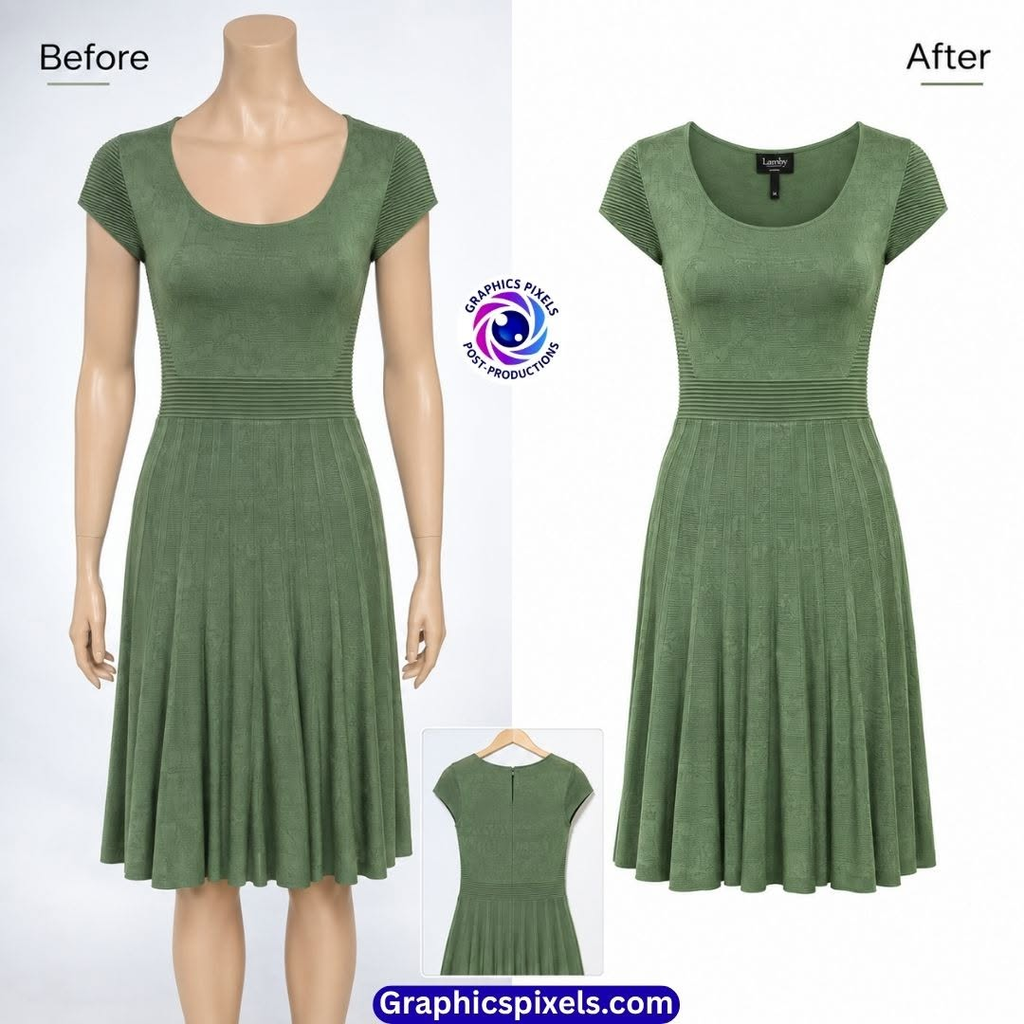
Ghost Mannequin Vs Model Photography ? High quality product images This is a major driver of sales conversion and customer trust in e-commerce apparel retailing. One of the biggest decisions that brand owners and e-commerce managers make is how much to spend on the photoshoot.
Choose the photography style that suits your business. On-model photos have emotional resonance and provide a lifestyle context, but ghost mannequin photos (also called phantom mannequin or neck joint editing) have a clean, 3D hollow-man shape that clearly displays product fit, fabric drape and structural details for a fraction of the cost.
And you asked it straight: What’s the best style for ROI & conversions?
Quick Answer:
Ghost Mannequin photography is cheaper to produce, more consistent, can show exact fit & delivers higher overall ROI for main product catalogue grids, core listings, Amazon/marketplace sales and budget conscious brands. The purchase decisions are more driven by the emotional connection and lifestyle aspirational value than the hero banner imagery, lifestyle branding, high fashion apparel and the social media advertising.
What is Ghost Mannequin Photography?
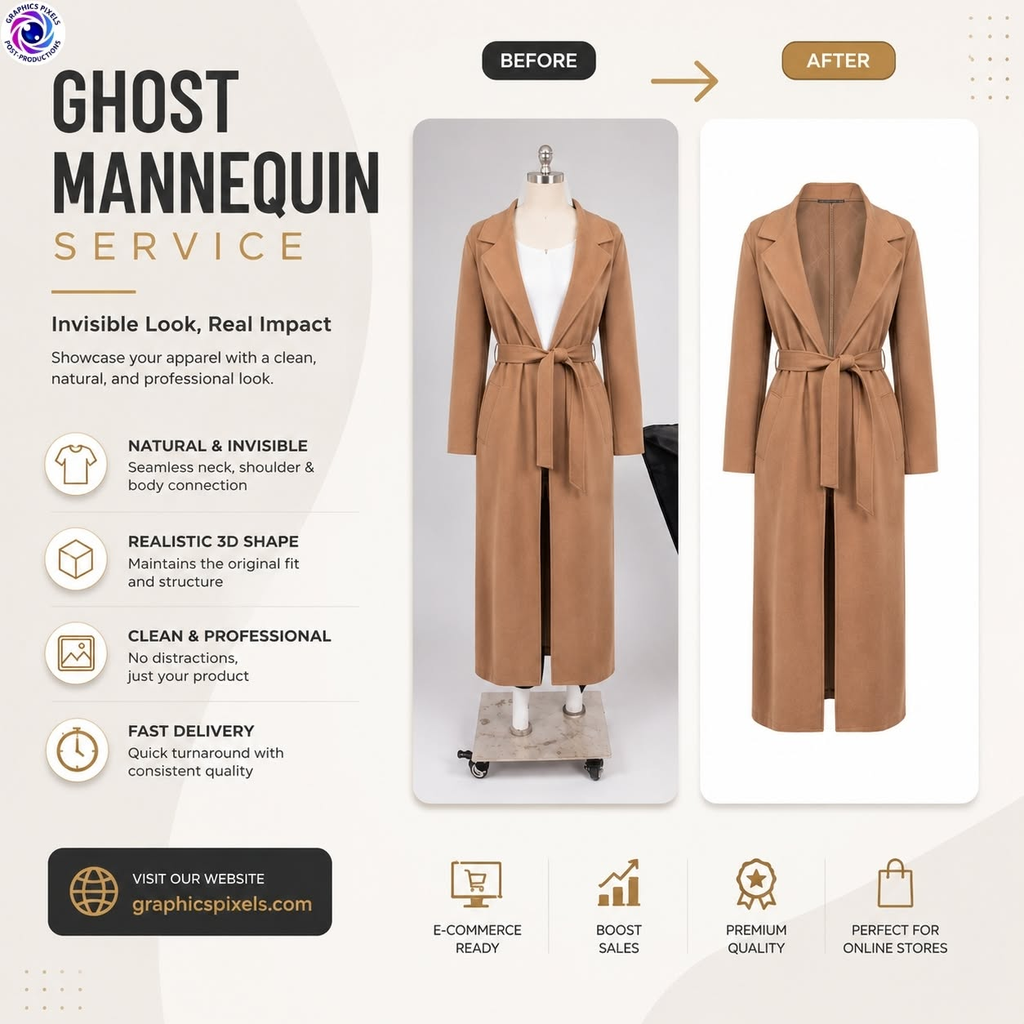
Ghost mannequin photography is a combination between photographing a real mannequin and special photo editing in post production. The shoot will be on dummy or on person for shooting. Next, the photo retouchers would use Adobe Photoshop to combine different camera angles (front view, back view, inner neck shots), to remove the mannequin.
Benefits of the key:
- No Model Fees. Affordable Production: No hair and make-up artists. No agency scheduling.
- 3D Garment volume: Reveals the natural drape of the fabric, the fit around the shoulders and the inner lining details without visual clutter.
- Uniform Catalogue Grid: Uniform layout for hundreds or thousands of SKUs
- Marketplace-Friendly: Amazon, eBay, Google Shopping love it for main product images.
Model Photography
Model photography is the art of photographing models. On-model photography is the art of photographing human models wearing and posing in apparel, either in a studio or lifestyle setting.
Key advantages:
- Emotional & Aspirational Appeals: Shows shoppers how the clothes look on a real person in real life situations.
- Movement & Drapery: How fabric moves, stretches and reacts to movement.
- Multi-Purpose Marketing Content: Create assets for social campaigns (Instagram, TikTok, Pinterest), email newsletters & website hero banners.
- Cross-Selling Opportunities: Models can be dressed head-to-toe (accessories, shoes, outerwear) to boost average order values (AOV).
Cost & ROI Analysis: Ghost Mannequin vs. Model Photography
You need to understand the financial trade-offs of each style to optimise your unit economics and shoot margins.
Cost and Return on Investment Considerations
| Feature / Metric | Ghost Mannequin | Model Photography |
| First, the expense of making | Low to Moderate (Adjusted 15-35 per SKU) | High (100-300+ per SKU including model, MUA, studio fees) |
| Production Speed | Fast (high volume throughput/day) | Slower (change in timing, time to style, constraints) |
| E-Commerce Conversion Rate | Higher for core listing grids and MarketPlaces | More for home page banners and life style campaigns. |
| Effect on the Return Rate | Reduces return (Shows real 3D dimensions) | Medium risk (Customer could confuse model’s body type with fit) |
| Opportunity to cross-sell | Low (one item of clothing in focus) | High (Multiple pieces, Outfit Styling) |
| Total Return on Investment | Great for scaling catalogues & long term SKUs | High for brand equity and customer acquisition |
Strategic Guide: When and What Style to Use
1. Ghost Mannequin Photography Usage
- E-Commerce Catalogue Expansion – Perfect for those times when you need to upload hundreds of new SKUs each season and on a budget.
- Amazon Marketplace & Listing – The primary image requirements for Amazon are clean, non-distracting product images.
- Structured & Tailored Apparel – Suits, blazers, coats, dresses, activewear need to be visualised in 3D shape.
2. When to take model pictures:
- Brand Launch Campaigns: To build a new fashion image through emotional branding and lifestyle appeal.
- High Fashion & Luxury Apparel: expensive clothes. Brand story driven, aspirational lifestyle.
- Social Advertising: Social media paid social ads work much better with human faces and lifestyle movement.
How fashion brands benchmark today: a hybrid strategy
Top e-commerce apparel brands go multi-style. They drive ROI and conversion rates with a Hybrid Visual Strategy:
- Ghost Mannequin Main Product Listing Grid: Primary image of Ghost Mannequin images to create clean consistent blurred grid catalogues.
- Other Gallery & Lifestyle Photos Photo Shoot by Model: Add 1-2 model or lifestyle shots to the secondary image gallery to show real world fit, movement and styling inspiration.
This hybrid approach reduces the overall cost of the photo shoot, while providing shoppers exactly the visual information they need to make confident purchasing decisions.
Apparel Ecommerce Graphics: Scaling your Graphics Pixels
Ghost Mannequin Effects is a major part of photo editing like Clipping Path Services, background remover, neck joint assembly etc. to give you clean photorealistic ghost mannequin effects.
Graphics Pixels converts fashion brands raw studio images to high converting 3D product images with 24 hours turnaround times.
👉 Need to do a bunch of ghost mannequin retouches?
Upload Your Images Today & Get 1 Hour Free Trial Project!