
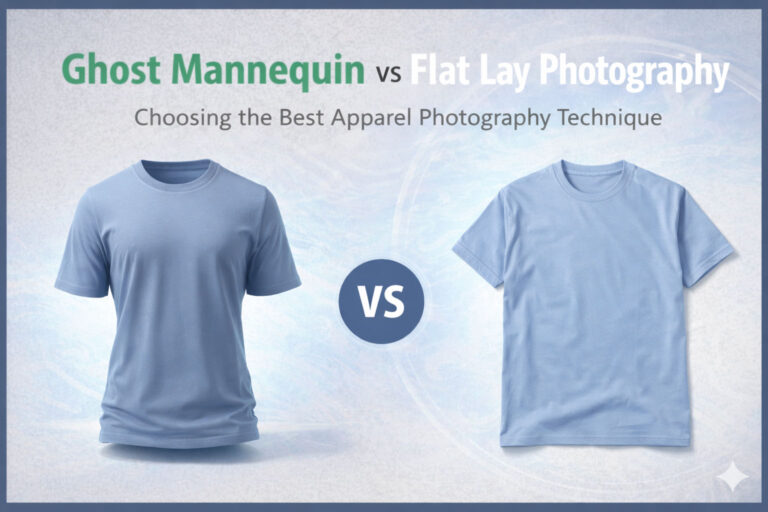
Your photos are your fitting room when you sell clothes online. They can’t touch the fabric or try it on, so the image needs to answer their questions.
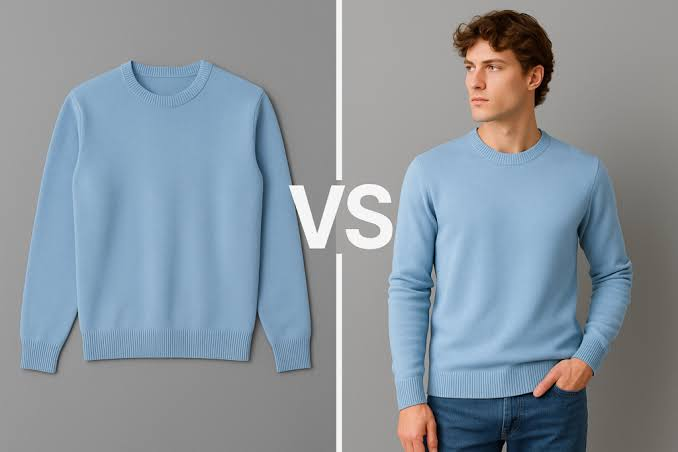
Three of the most common styles are:
- Ghost Mannequin
- Models
- Flat Lay Photography
Each has its own strengths, and the best choice depends on what you are selling and who you are selling it to. This guide compares them, so you can make your choice with confidence.
The Quick Answer
There is no single style that wins everyplace.
- Model photos are usually your best bet for fit and style.
- Ghost mannequin images provide a clean view of shape and structure at a reasonable price.
- Flat lays are the cheapest and fastest but show the least about how a garment will look when worn.
The most successful stores mix these styles and try out what works best for their own customers.
What Each Style Means
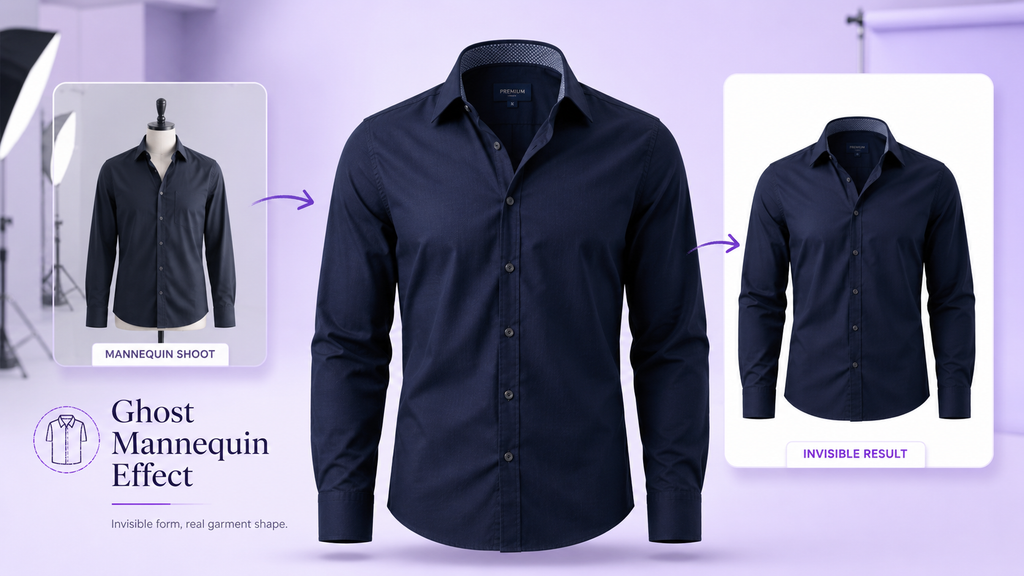
- Ghost Mannequin: It displays the garment in a 3D way as if it is worn, without any person or mannequin. Once the mannequin is removed the inside of the collar and sleeves are redone so the item looks natural in the post.
- Flat Lay: A photo of the garment laying flat on a surface, photographed from above. Sometimes with styling props.
- Model Photos: Images of the garment on a real person, either in studio or lifestyle setting.
Side by Side Comparison
| Feature | Ghost Mannequin Effect | Flat Lay Photography | Model Photos |
| Indicates shape, volume | Good | Limited | Best |
| Body fit | Restricted | Worst | Best |
| Movement and flow | Restricted | Worst | Best |
| Cost | Low | Low | Moderate – High |
| Speed | Moderate | Fast | Slow |
| Consistency of catalog | High | High | Is different per session |
| Editing is required | Medium – High | Low | Moderate |
| Focus remains on the product | High | High | Shared with model |
Breakdown of Each Style
1. Ghost Mannequin Photos
- Strengths:
- Shows the garment keeping its shape, such as collars, shoulders and structure.
- Uniform look for hundreds of products.
- “It’s about the product, not the person wearing it.”
- No model fees, ever. Reusable configuration.
- Weak spots:
- Needs careful shooting and editing. Neck joints in particular.
- No showing of how the item fits on different body types.
- Loose or flowing clothes can appear stiff.
- Best for: shirts, jackets, blazers, hoodies, dresses, structured tops and stores with large catalogs.
2. Flat Lay Photography
- Strengths:
- Fastest to build, cheapest.
- Easy to set up, little equipment needed.
- Good for accessories, foldables, casual social media.
- Outfit combinations and styled scenes are easy to create.
- Cons:
- Clothes can look flat and lifeless.
- No real shape, fit or proportion.
- Wrinkles and creases become more prominent.
- Ideal for: Small stores, t-shirts, basics, accessories and social media content.
3. Model Images
- Strong points:
- Shows the true fit, length and drape.
- Helps buyers visualize the item on themselves.
- Good at creating style, mood and identity as a brand.
- Can show different sizes and body types which builds trust in buyers.
- Weaknesses:
- Most expensive (model, photographer, studio, styling, editing).
- It takes longer to schedule and produce.
- You can have consistency problems between shoots and models.
- If not directed well the model can take the focus from the clothing.
- Best for: Fashion brands, premium products, items where fit is the major selling point (jeans, swimwear, activewear, formal wear) and hero images.
So What Sells More?
It has four key factors at its foundation:
- Your Product: If the shape and structure is important ghost mannequin or model photos help. If fit and drape are most important, model photos usually win.
- Your Customer: Budget shoppers may want to see clear product detail, while fashion-driven shoppers often want style and context.
- Your Platform: Marketplaces have rules regarding main images and generally prefer clean, product-centric images. Always check the current requirements of the platform you’re selling on.
- Your Budget and Volume: A store with 1,000 products can’t afford a model shoot for every single product, but a small brand with 20 products might.
Pro Tip: The best way to answer “which sells more” for your store is to test it. Alter the main image for a couple of products, and then track click-through and conversion rates for a couple of weeks. Your data is more valuable than any claim.
The practical approach most stores take is:
- Primary product image: Ghost mannequin or clean model shot (varies by category).
- More Pictures: Back view, Detail pictures, Lining or tag inside.
- Fit & Style: 1-2 model photos of item being worn.
- Extra: Outfit ideas and flat lays for your social media feeds.
This middle ground approach gives shoppers the shape, details and real life fit without paying for a full model shoot on every single product.
Style Is Less Important Than Quality
A good flat lay > bad model shot. Regardless of what you choose, these basic principles dictate whether a picture helps or hurts sales:
- Clear focus and uniform illumination
- Accurate colors as the real product
- Uniform, clean backgrounds
- Smooth clothes, no creases to distract
- The same size, angle and framing throughout the catalog
- Clean edges of the product
Whether you choose one style or another, the wrong colors and bad editing will cause returns and a loss of trust.
The Difference is in the Editing
Ghost mannequin images are highly dependent on accurate editing. Taking the dummy out. Joining the neck portion. Fixing the creases and matching the colors. Photos of models and flat lays also benefit from clean cutouts, retouching and color correction.
If editing is slowing you down, outsourcing can keep your quality up while you focus on shooting and selling. Here at Graphics Pixels we have a ghost mannequin service with a free trial so you can send a couple of images and see the results before committing to a larger order.
Closing Words
Ghost mannequin, flat lay and model photos each solve a different problem.
- Ghost Mannequin: For shape and consistency.
- Flat Lay: Gives speed and low cost.
- Model photos: Shows fit & styling.
Instead of searching for the single winner, create a mix that fits your products and budget, then test and refine it using your own sales data.
Frequently Asked Questions (FAQ)
Q. What is the cheapest ghost mannequin, flat lay, or model photos?
Flat lay is usually the cheapest, ghost mannequin in the middle and model photography is the most expensive.
Q. Is ghost mannequin better than model photos?
No, not always. Ghost mannequin is better for consistency and product focus, model photos are better for showing fit and style.
Q. Can I use ghost mannequin images only in my store?
Yes, a lot of stores do. But a few model photos can really help customers understand fit better.
Q. Do places like Amazon like one style?
Every marketplace has its own image rules and these change with time. Check the current guidelines for the platform you are selling on.
Q. What style is best for a beginner?
The easiest way is to start off with a flat lay. As your catalog grows, you can transition to ghost mannequin for a more polished, consistent look.